Moxibustion has been used in traditional medicine for thousands of years, often alongside acupuncture. If you've heard the term but aren't sure what it involves — here's a straightforward explanation of how it works and what a session at Aujaswa looks like.
What is moxibustion?
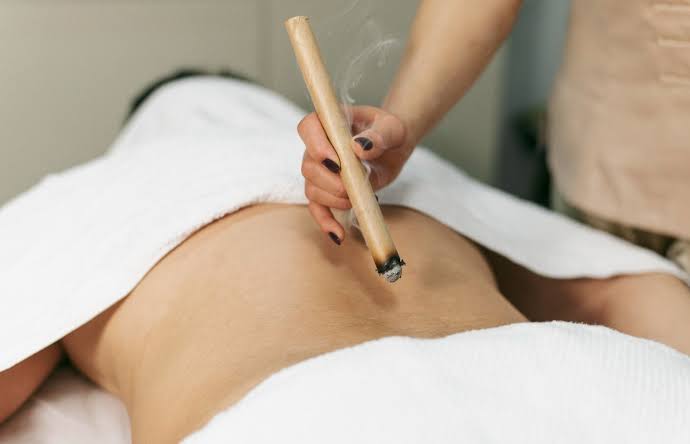
Moxibustion is a therapy that involves burning a small roll of dried mugwort — called moxa — and holding it close to specific points on the body. The moxa stick is never placed on the skin directly; the therapist holds it at a careful distance, allowing the warmth it produces to reach the acupuncture point below. The heat is gentle, penetrating, and pleasant for most people — quite unlike the sharp discomfort some might associate with heat-based treatments.
Mugwort (Artemisia moxa) has been used in East Asian medicine for centuries, valued for the particular quality of warmth it produces when burned. Traditional practitioners describe its heat as "reaching deeper" than surface-level warmth, though from a contemporary perspective it is understood as gentle, sustained thermal stimulation to a localised area.
How does it work alongside acupuncture?
In many sessions, moxibustion is used as a complement to acupuncture rather than a standalone treatment. The same points used in needle-based acupuncture can be warmed with moxa before, during, or after needle placement — the approach depends on what Reshika determines is appropriate for your session. Some people respond particularly well to warmth-based stimulation, especially where cold or stiffness is part of the concern.
It is also used on its own, without needles, when a gentler or more warming approach is preferred.
What is it commonly used for?
Moxibustion is traditionally used to support circulation and ease areas of the body that feel stiff, cold, or heavy. At Aujaswa it is commonly used for muscle stiffness, cold-related discomfort, and general energy support. It is also sometimes incorporated when a patient finds needle-only sessions too stimulating, or when the area being worked on responds better to warmth than to pressure or needling alone.
As with all therapies at Aujaswa, the decision to include moxibustion — and how — is based on your individual consultation and session history, not a fixed routine.
What does a session feel like?
Most people find moxibustion deeply relaxing. The warmth builds gradually at each point and then the moxa stick is moved along before the heat becomes too intense. The scent of burning mugwort is distinctive — earthy and slightly herbal — and some patients find it part of what makes the session feel grounding. Rooms at Aujaswa are ventilated to manage this.
There is no burning, no contact with skin, and no pain. Sessions incorporating moxibustion tend to feel slow and restorative — quite different from the precision of needle placement.
Is it right for you?
If you are curious about moxibustion — whether as an alternative to needles, a complement to your existing acupuncture sessions, or simply because warmth-based therapy appeals to you — the best starting point is a short conversation. Message the clinic on WhatsApp with a bit of context about what you're looking for, and Reshika can advise whether moxibustion, acupuncture, or a combination would suit your situation.